Friday, 1 March 2013

The 5 AM Twitter Rant


28th February, 5 AM, I went Twitter-mad. This is the 89-Tweet rant that followed. (In the correct chronological order). Enjoy. Agree. Refute. Click the picture to find and follow me.


01. I can't sleep. My day begins at 6:30am today and won't end till about 10:00pm. And then there's #bbcqt.

02. I'm knackered as it is. Yesterday wasn't a walk in the park either.

03. I'm gonna go all random now. Better to give up trying to sleep.

04. So, why are the Left called "Liberal"? I find that they're anything but.

05. I've lived through dictatorships, military rule, extreme religious-based governments, even a form of Sharia law and monarchies. >>>

06. >>> But nowhere have I seen a stance as hardline as the so-called "Liberals" and socialists.

07. I recently read an article in the Times, by Libby Purves, I think. Purves talked about "The Tyranny Of Cool".

08. While Purves was referring to pop culture and social behaviour, if I remember correctly, I can draw some parallels with how >>>

09. >>> socialism seems like a sexy and seductive idea.

10. I remember USSR of the 80s, when I would help my Dad with the business. The average Joe was pretty hard up in Russia.

11. I was too young to be chasing girls back then, but I remember stories of how you could "buy" the services of a >>>

12. >>> ramp-modelesque woman for an entire month for less than the cost of an evening’s drinks. And by services I mean >>>

13. >>> cooking, cleaning, shopping, and yes, sex on demand.

14. I was around 12 or 13 at the time. And yes, I did help my Dad in his business at that age, for three months of every year.

15. Having studied in India, we had this image of the USSR, superpower, rich, advanced. >>>

16. >>> When I was slightly older, around 15-16, I saw it firsthand. Even at that age, I could tell it was seriously flawed and wouldn't last.

17. And sure enough, a couple of years later, it fell apart. The champagne socialists carved up the country between themselves.

18. Rich barons were created overnight and formed a cartel of sorts - it was like Russia had gone back to the Tsars.

19. I saw it coming. I saw it coming before I hit puberty.

20. And my disdain for socialism, social engineering, big government was planted then. I read Marx. WTF was he smoking?

21. I remember once I needed to move some grain. We needed to charter a few planes and someone suggested I hire the ALN124s from Moscow.

22. The ALN124 is a beast. It was used by the Soviet war machine to transport tanks and troops. You can fit a Boeing 747 in it.

23. It was built at the peak of Soviet power, with no consideration to sustainability or cost effectiveness. They wanted it, they built it.

24. When the USSR collapsed, and market realities hit, they realised it wasn't economical to maintain them. They sold them.

25. The people who bought them tried to charter them out to transport goods, but there were no takers. It would have been cheaper to >>>

26. >>> charter three 747s for less than 3/4 of the money need to get that pile of junk into the air.

27. Plus, not many airports in the world could handle a plane like that. It needed more room than the Concorde.

28. There are hundreds of such examples from USSR, thousands maybe. On a smaller, but equally damaging scale we >>>

29. >>> do a lot of that here in Britain too. And we're not even a communist state. Or are we?

30. Over the next week or so, I will be tweeting out some of the disastrous ALN Ruslan 124s of Britain.

31. Some of them will make your skin crawl. Whether you're a well-meaning Lefty, or a misguided Commie, you will cringe.

32. Money, lots and lots of money, more money than you can ever imagine - YOUR money, money taken off welders and plumbers, >>>

33. >>> teachers and cleaners, shopkeepers and bus drivers under threat of imprisonment spent on things that made >>>

34. >>> not one iota of a difference to a single life. Apart from the company favoured by the state's patronage. Like the Tsars of old.

35. Corporatism is the government's creation. It is not the result of free markets; rather it is the intended consequence of regulated markets.

36. Put that in your pipe and smoke it for a while, before you ask me why I think so.

37. Socialism, that egalitarian utopia mostly monied folk write about in the Guardian is the biggest con going.

38. It's the easiest sell in the world. After all who won't buy into slogans like "fairness", "equality" and "prosperity for all"?

39. Most proponents that plug socialism have their faces stuffed with enough money that they're set for life.

40. The poor in the meantime, lap it up.

41. Many celebrities PRETEND to live in this Lefty la-la land. It goes down well with their customer base, comprende?

42. EMA, for example. There are countries where people walk for miles, barefoot to get an education. >>>

43. >>> Go to any city in India and you WILL find some kids studying late into the night - on pavements, under street lights.

44. We in Britain have to give all kids £30 a week just to show up? Oh and on top of that, free travel too?

45. Labour screamed when EMA was abolished, will they bring it back? Do they have the costings for it? Nope.

46. If you look at the Lefty blogosphere & Twitterverse, you'll find it's filled with well-paid or set for life individuals >>>

47. >>> wracked with guilt and self-loathing over their prosperity. They're always angry.

48. They come in all shapes and sizes. A surprising number are sorted by independent means - a book that did well, a trust fund, >>>

49. >> a very, well-paid, usually public sector job, a wealthy spouse, own home in suburbia and a lot of time on their hands.

50. The irony of course is that these champagne socialists acquired their means through capitalist means.

51. Their anger stems not from seeing inequality, but from feeling deep within that they are not worthy of what they have. Hence the anger.

52. So all ranting, all the raving, all the being offended on behalf of those-who-have-no-idea-they-should-be-offended is nothing >>>

53. >>> but their way of justifying their existence. To themselves.

54. And now, I think I should get some tea. :-)

55. Little do the Lefties and statists that decry corporatism know, they are the cause of it.

56. Strangle an industry sector with enough regulation and pretty soon you'll find all the little players wilt away.

57. This is how corporates grow, at the expense of smaller players - often mom-and-pop outfits edged out by government meddling.

58. In a completely free market, this kind of consolidation would be extremely rare. And if it does happen >>>

59. >>> profits will soar, when that happens more players jump into the fray.

60. Take for example, the horsemeat saga. Local producers of meat tick every box, cross every t & dot every i, incurring costs >>>

61. >>> that foreign producers don't have to bear. Result, we eat meat from abroad and our producers die out.

62. The playing field is not level at all. Now I'm not suggesting a protectionist stance, or even subsidies, but shouldn't >>>

63. >>> British producers and manufacturers be afforded the same privileges as foreign ones?

64. What the hell happened to our pottery industry? China didn't kill it. The tree-hugger do-gooders did it.

65. I don't these Greenoids either. Killing off entire industries in Britain, only to import the same stuff from elsewhere. >>>

66. >>> So we don't have smokestacks here. Great. Guess what? Your 64-piece dining set was made in China. They've got smokestacks now.

67. Cut down carbon emissions in the UK, never mind them moving to China, or India. It's not like it's the same atmosphere, is it? Morons.

68. And while India and China burn away 17 times as much coal as Europe, to make the stuff for us that we don't make any more >>>

69. >>> We're smug and safe knowing that we're going to arrest global warming with a special light bulb and a sodding bag for life.

70. That's been one hell of a rant. 70+ Tweets so far. I wonder if anyone's reading. My phone is hot!

71. The only Lefties I will ever believe in will be those that give everything they own away and live on what they call a living wage.

72. If you don't do that, your principles are a load of bull.

73. When I say give away, I mean everything. Except your house. That should revert to the state when you die. Can you do that?

74. I didn't think so.

75. And Lefties that own more property that the one they live and/or work in. Erm... how does that work with your principles?

76. I know a Labour Councillor who has EIGHT homes apart from the one she lives in. All rented out to housing benefit claimants. Cozy, eh? >>>

77. >>> Don't worry, she's not on Twitter. She can't even read and write in English. They use a Council-funded interpreter. >>>

78. >>> I won't be naming her, but there at least three people on my timeline who know whom I am referring to.

79. Some time ago, I blogged about the National Minimum Wage and why it's wrong. I got attacked, but of course... >>>

80. Lefties said "When the NMW was introduced; people like you said business would die. But see? Companies are making record profits" >>>

81. My reply, "Yes they are, on goods imported from abroad. We don't make it here any more. We bloody can't afford to."

82. I have to say though; the welfare state is the best idea since democracy. I believe in it. We're doing it all wrong.

83. India's launched a women-only bank. Public sector, of course. What next, women-only shops and bazaars?

84. Question: Would you go to a shop that is known to offer shoddy quality/service? Answer: No. You'll go to another shop. << Capitalism

85. The EU decides to cap performance related pay. As if there aren't other ways to pay people. The tax take doesn't change one bit you morons.

86. Governments in the developed world take far more money than they need to provide a solid, working welfare state.

87. Every year 1.3 Billion tonnes of food is wasted. 1,300,000,000,000 kilograms. That is a failing of regulation. Not markets.

88. Markets do not waste. There is no greater resource allocator than a free and unfettered market.

89. Right First Great Western, I've had a shitty night and a ranty morning. You had better not add to it.


And with that, I went to catch my train.

The Man In The Arena


It is not the critic who counts; not the man who points out how the strong man stumbles, or where the doer of deeds could have done them better. The credit belongs to the man who is actually in the arena, whose face is marred by dust and sweat and blood; who strives valiantly; who errs, who comes short again and again, because there is no effort without error and shortcoming; but who does actually strive to do the deeds; who knows great enthusiasms, the great devotions; who spends himself in a worthy cause; who at the best knows in the end the triumph of high achievement, and who at the worst, if he fails, at least fails while daring greatly, so that his place shall never be with those cold and timid souls who neither know victory not defeat.


Theodore Roosevelt | Citizenship In A Republic

Monday, 11 February 2013

Unleashing Welfare To Work


It is a given that we always have, and will continue to spend billions on welfare-to-work schemes in the UK, so I'm going to talk from the premise that money IS going to be spent. My political leanings and fiscal conservatism largely stem from that fact that, I believe we're spending it wrong, we're funding the wrong things, in the wrong way and on the wrong priorities and burdening those that spend the taxpayer's largess on nonsensical guff. Despite what the next paragraph may seem, it isn't an attempt at self-aggrandisement. It's more an expression of my frustration at my government and the establishment's inability to see the forest for the trees.

I have a long history in what has become an industry in its own right, starting out in 2000; as a claimant, slotting into several of many client groups that defined my "distance from the job market", I bridged the distance fairly quickly - in a couple of months - partly due to efforts of those driven by profits, some of them actually well-meaning, but mainly due to my own drive, determination and perseverance. My journey has never been a secret - I tell my story to all and sundry, but much of my learning remains an impenetrable mystery - only because it doesn't fit the narrative of how things are meant to be, as seen by the powers that be. I have defied each and every stereotype time and again and refused to fit into the mould I'm meant to occupy. My goal in life is to show that everyone has the capacity to do the same and rise above the predefined bracket they're meant to occupy.

In the 16 years I have spent in Britain, I have directly and indirectly been responsible for assisting over 60,000 people into, or close to the job market, mentored over 500 people into better careers, changed lives, and I continue to do so. I am actively involved with three charities, one of which isn't even a formally constituted one. I love, live, and breathe what I do - and aside from the work I do on a voluntary basis - I resent the way I'm required to do it. This isn't about making anyone look good, not the government, not the Skills Funding Agency or the DWP. This is about doing what needs to be done. What I call the Tory way. This is what I consider the Big Society.

Getting people off welfare and into work should have but ONE goal - sustained employment for those that come to you for help. Or so you would think. Sadly, it's nothing like that in the world we inhabit. It's sad that far more important than outcomes, is process, needlessly made cumbersome and overly weighted in favour of mindless procedure and inexplicably prescriptive ways of how things ought to be done - as opposed to how things CAN be done. This leaves no room for imagination, innovation, or ingenuity and is usually dictated by the kind of regulation that favours organisations with financial clout - brawn over brains. This is wrong and unproductive. I could go into a more detailed explanation, but I need to get on to the main purpose of this blogpost. A lot of what I say below will easily make sense to people involved in the business of helping people into work. To those it seems alien gobbledy-gook, ask me and I will explain.

In very broad brush-strokes and as simple as I can make it sound, is what I think the government should (could?) do:

1. ANY formally constituted organisation (for the sake of clarity, I'll call them providers), small or large, with or without staff, with or without a myriad of mind-numbing statutory, lip-service policies, with or without a bank balance and with or without a formal contract - should be able to walk up to the JobCentre, present a predetermined set of documents and claim payment for a job outcome, a sustained job outcome over a 3-month period, a 6-month period or a 12-month period. This predetermined set of documents could include (a) an Individual Learning Plan-cum-Registration Form containing relevant information on the client helped (name, address, contact number, course of action, number of barriers being addressed, client group (see 4 below) and a unique identifier, such as a national insurance number, against which payments can be tracked to avoid duplication), (b) a series of Intervention Evidence Forms documenting the work done and assistance provided, (c) Outcome Evidence, signed by both the client AND the employer showing that the person is indeed employed. Before making any payments, the JobCentre could contact or even visit the employer and the client to verify the claim, say within 28 days. A simple identifier for the provider, say the UKPRN number should be sufficient to monitor payments against.

2. A client may elicit the assistance of any number of such providers: a church, a temple, a mosque, a support group, a community group, a job club, a training provider, a college, a charity, the local library, or even a two-bit employer, etc - the one with the relationships on the ground and thus the ability to evidence an outcome gets to claim it. Simple market forces, ingenuity and resilience at work. This will unleash the power of the thousands of organisations that have the capability, the willingness and the ability to help, but go unrewarded when they choose to help anyone. Incentivise them: it doesn't get any more Big Society than this.

3. A system like this could run parallel to existing government schemes and since it only pays out when there is a successful outcome - it will always remain cost neutral. In time, comparisons will reveal how successful this can be as opposed to organisations that make Ofsted happy and have ten million in the bank.  No targets, no contracts, no too-big-to-fails, no egg-on-the-face scandals.

4. Some clients need more support than others and thus are more costly to work with; payments claimed should reflect that. It should be down to providers to establish - and evidence which group the client belongs to. These could be young persons, persons with a disabilities, long term unemployed persons (6 months, 12 months, and so on), unemployed non-claimants, dependents, refugees, non-English speakers, etc, each one with a multiplier on a base rate for a straight JSA/ESA claimant. It's not rocket science. A simple form could help determine that.

5. I know there will be FAQs; here are some that immediately come to mind:

What about qualifications of the provider's staff and licenciature?
Anyone can help with job search. Anyone can help boost confidence. Anyone can assist with applications. If they get the job done, does it matter? Seriously, does it matter? How? Why?

But we have invested thousands in upskilling our staff, developing training materials and methods. What of that?
Well, what of it? If all that training, all those systems and materials are any good, you will get more people into work. You'll get more people into work, and be rewarded for it. What's the problem? What are you afraid of?

What about established procedures, systems and compliance?
Compliance with what? What for? If you are a formally constituted provider, you will have already been checked, inspected and due-deligenced by OFSTED, one or more 'primes', HMRC, one or more awarding bodies, your local authority, the LSE, the DWP, the HSE, your partnership organisations, the Charities Commission, and depending on what you do, one or more of many other QUANGOs. You want more? You'll have a client charter, you'll be insured  to the hilt, and if you get it wrong, you'll leave yourself exposed to negligence claims. That's your problem. As for your 'established procedures and systems', if they're any good, you will get more people into work, won't you? Where's the problem?

But won't this system encourage cherry-picking of the best, most job-ready clients?
Yes it will. Are you telling me existing systems don't do that? Please.

What about sustained support to ensure people stay in work? How can just ANY provider be guaranteed to provide that?
Easy. Payments can be graded so as to rise for each consecutive period of sustained employment. For example, 20% on a job outcome, 30% on a 3-month retention and 50% on a 6-month retention. A well-designed set of claim forms can limit payments to results.

Recruitment agencies will have an unfair advantage, won't they make a killing?
I hope they do. And why is it an unfair advantage? That IS their business, isn't it? An experienced plumber is better at fixing my boiler than I am, nothing wrong with that, is there? If they've evidenced a long-term, unemployed, benefit claimant into work, why not? Doesn't everyone win? This is a public service, not a competition. You're in it for the money, then do what you can to earn it. Be an employment agency if you have to be.

What if providers do nothing to assist someone into work, but claim an outcome anyway when someone finds a job? Isn't that fraud?
Remember the bottom-line: A person is in work. As long as the evidence, signed by no less than three parties (see 1c above) is in place and verified, this shouldn't be a problem or anyone's concern.


Of course there is far more complexity than what I have very simply explained above, but I'm happy to answer questions. I'll add more FAQs as and when I get them. Go on; poke all the holes you want. Please don't tell me how much you've invested - tell me how much you get done - not in terms of sheer numbers you attract with your government sanctioned monopoly of sorts because of your financial and bean-counter driven clout, but in terms of actual percentages of people you see and people you actually help.

This is a terrible comparison, but it would help if you saw this as the difference between a local butcher served by a small livestock farm and a supermarket supplied by an automated abbatoir.

Monday, 28 January 2013

The EU Hokey Cokey


It's all kicked off about the European Union now hasn't it? What on earth is it? What is it for? What exactly is its purpose? How does it benefit Britain, or any other member state in any way? What has it ever done for us? What does it mean for us to be a part of it or outside it? What can the Europhiles see that the Eurosceptics can't? What are the Eurosceptics on about with their demands for an in/out referendum? What do the mango people (aam aadmi - common people) feel about the European Union? 

Now I'm no political commentator or economic analyst; a lot of my opinion will qualify as a layman's approach, which in truth, it is. There's very little right-wing or left-wing about how I see the European Union - I just use common sense, which sadly isn't all that common. 

I simply don't get the point of the EU. Why we need an 'arrangement' with a select group of countries to the exclusion of all others is beyond me.

To begin with, we can't leave Europe. Not unless the British Isles sail away in some kind of accelerated continental drift and move into the middle of the Atlantic. We're a European country in the same way that Afghanistan and Japan are Asian countries. We're not going anywhere - not for several hundred million years at least. I thought I'd settle that first.

While the ~phobes and the ~philes argue it out in the papers, on TV, on blogs and Twitter, here's what I have to say:

They say Europe as a single entity ended the prospect of warring nations in Europe. Nope. It was the United Nations, NATO, thousands of American troops stationed in what used to be West Germany and billions of US dollars that ensured the little European nations behaved themselves. That and sheer exhaustion from two bloody world wars.

They say the EU provides 57 per cent of our trade. Well duh! - they're our immediate neighbours. It's plain geography. Countries in the European mainland have always been our main trade partners. This has nothing to do with being in or out of the EU. Countries of the EU don't buy from us because we're in an exclusive club with them. Only a deluded fool would think France will buy ships from us instead of South Korea because we're in the EU and they're not. Besides, we're one of the top markets for German cars and French wine. I call this the let's-join-a-trade-cartel-argument, which goes against the very idea of free trade. Oxymoronic much? 

They say the EU ensures we have lead-free petrol, cleaner air, clean beaches and rivers, restrictions on landfill dumping, a recycling strategy, a ban on growth hormones and other harmful food additives, wildlife and environmental protection, social welfare, smoke-free workplaces, minimum wage legislation & holiday entitlement, prevention and break-up of monopolies, patent & copyright protection, consumer protection & rights, harmonised food labelling, better product safety and improved animal welfare. Utter nonsense! All of it. You would think that Britain is a barbaric outback, completely unable to formulate any policies which have the same effect. What people seem to forget that most of the above, by some measure were brought about in Britain by Britain. Many of the international standards find their origin in BSI. We're capable of keeping our beaches clean and can label our food by ourselves, thank you very much. In any case, there are international protocols we're bound to (Kyoto, et al). There is no need for an extra bureaucratic machine duplicating everything.

They say staying in the EU means no paperwork or customs for exports throughout the single market, the removal of commission on currency exchange, the freedom to travel, live & work anywhere in Europe, and ease of investment in all member states. Don't even get me started on the alleged 'reduced paperwork' for ANYTHING to do with business, private or public. Don't. The United States of Europe is not the same as the United States of America. A trucker from Arizona can easily relocate to Minnesota, provided he can find a job. Would it be as easy for a Italian to move to the Netherlands if he doesn't speak Dutch? I don't think so. Again, there is no need for an extra bureaucratic machine to do this, we can agree to be an open market and leave it there. A fine example would be the arrangement between India and Nepal.

They say the EU provides for counter-terrorism intelligence, policing to combat human trafficking, arms & drug smuggling, civil and military co-operation, continent-wide arrest warrants & crime prevention, support for human rights. Yeah, sure. Do the United Nations, INTERPOL and UNHCR, to which pretty much the WHOLE world is signed up to, mean nothing?

They say EU-wide powers to fire journalists and impose fines would improve reportage and press freedom in certain countries. Possibly true for, say Romania, but what about the countries that already have a free press and the associated laws to maintain journalistic standards? What of privacy and libel? A Berlusconi-esque British politician would be untouchable. Makes you shiver, doesn't it?

They say companies would avoid investing in Britain if we weren't in the EU. Crap. Companies go where the taxes are the lowest. Ever stop to wonder why many of the world's largest companies are headquartered in the non-EU Switzerland? Low taxes.

They say that a single European currency would protect all countries from a currency crisis. In a perfect world maybe, but where's the accountability and fiscal responsibility? Greece benefited from low bond yields on its debt because people felt Greek debt would be secured by rest of Europe. Look what happened when the whole world was lulled into a false sense of security. A single currency and monetary policy leaves no scope for devaluation by individual nations. Since the introduction of the Euro, labour costs have risen all over Europe. The main result of this has been uncompetitive exports, which shifted industry to the developing world. Faced with uncompetitive export prices, a country would normally devalue to restore balance. You can't do that with the Euro now, can you? Result? Record current account deficits, falling exports, low growth and a decimated manufacturing sector. It's way cheaper to buy from India or China.

They say the ECB can do a better job of maintaining equitable interest rates across the region. How is that even sensible? Europe-wide interest rates set by the ECB can never be suitable for areas that grow faster or slower than the average. For example, if the ECB raises interest rates because of fears of inflation in one country, it would savage another country descending into recession at the same time. This is what accelerated the meltdown in Portugal, Greece and Italy. 

They say the Common Agricultural Policy supports European farmers. The CAP subsidised European farmers to produce goods with little regard for international market forces and demand. This excess supply was often dumped on world markets creating falling prices and incomes for world farmers. As the EU bleeds their taxpayers for subsidies for farmers, we're witnessing large scale suffering in developing countries who are unable to sell their produce internationally in competition with state subsidised farmers. The carnage of suicides among farmers in India and African farmers going under are just some of the examples of the fallout.

They say the EU provides structural funding to areas hit by industrial decline. Really? Well guess who pays more than they get back? I could think of far better ways to spend £50+ million a DAY. Remember - log, your own eye, first. This argument is far from over.


"Of all tyrannies, a tyranny sincerely exercised for the good of its victims may be the most oppressive."  |  C.S. Lewis

Wednesday, 23 January 2013

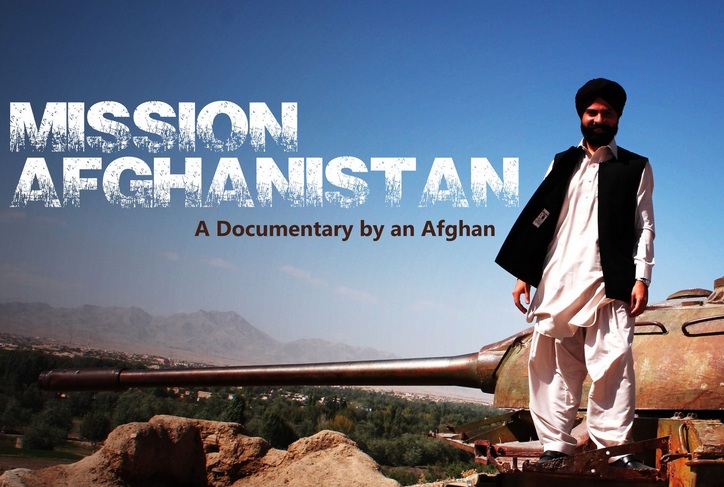
Mission Afghanistan


Last October, I wrote about Pritpal Singh, a.k.a. The Dutch Sikh, and his travels to Afghanistan, in an effort to explore his roots and the land of his birth. The documentary, mentioned in my blog is now ready. It was aired on Sangat Television on January 20th, 2013. The production of this documentary was funded by the Guru Nanak Darbar, Southall.

If the images Pritpal brought back from Afghanistan and the teaser trailer of the documentary titled Mission Afghanistan were anything to go by, I knew this was going to be emotional. I've watched it several times now, initially in a rush to take it all in, and then subsequently with more care - looking for places I would recognise, listening to the sounds, looking at the faces and feeling the atmosphere of the country I once called home. Pritpal delivered. In spades. 

Not that it made easy watching. It wasn't long before the nostalgia was sated and the grim realities on the ground began to hit home. Afghanistan is a mess. Mission Afghanistan paints a bleak picture of bullet-ridden buildings, particularly the gurudwaras and temples, widows and children surviving on charitable donations, fear and desolation in the eyes of a community on the verge of extinction in a process that can only be described as ethnic cleansing, the lack of education of any kind, unimaginable poverty, people living in houses with an acrylic sheet for a roof while there's knee-deep snow outside, the shattered Shorbazaar area where my mother grew up, the furtive and secretive cremations held by Hindus & Sikhs, the overt discrimination and racism, and entire townships where no Hindus and Sikhs remain.

Despite all this, as one resident explains, they are not seeking charity. "What," she says, "will happen when the money people send runs out? We need sustainable solutions. We need education for our children. We need to feel safe."

As I write this, in my centrally heated home, on a laptop that cost more than what some families in Afghanistan live on for a year, aggravated by the disruption to my life caused by 3 inches of snow, fuming over semantics on Twitter, I can't help thinking how shallow we can be. No misery in the UK comes even close to what they're experiencing. And it's set to get worse: the proposed withdrawal of NATO forces in 2014 fills me with dread.

Like most readers of this blog, I don't have Sangat TV, but fortunately the entire documentary is available online. Click the image below to view the film.


Monday, 7 January 2013

You want to see a miracle, son? BE the miracle.


God: It's a wonderful thing; no matter how filthy something gets, you can always clean it right up.

Bruce: There were so many! I just gave 'em all what they wanted.

God: Yeah. But since when does anyone have a clue about what they want?

Bruce: So, what do I do?

God: Parting your soup is not a miracle, Bruce. It's a magic trick. A single mom who's working two jobs, and still finds time to take her son to soccer practice, that's a miracle. A teenager who says no to drugs and yes to an education, that's a miracle. People want me to do everything for them, when what they don't realise is, they have the power. You want to see a miracle, son? BE the miracle. *Turns to leave*

Bruce: Wait! Are you leaving?

God: Yeah, I figure you can handle things now.

Bruce: But what if I need you? What if I have questions?

God: That's your problem, Bruce. That's everybody's problem. You keep looking up.

Bruce Almighty | Universal Pictures | Morgan Freeman | Jim Carrey

Saturday, 10 November 2012

Words For Teenagers


There's a social media meme attributed to John Tapene, principal of Northland College in New Zealand that's been doing the rounds for a couple years. I had to share it. Quoting a judge who regularly deals with youth, Tapene says -


John Tapene
 "Always we hear the cry from teenagers 'What can we do, where can we go?'"

"My answer is, "Go home, mow the lawn, wash the windows, learn to cook, build a raft, get a job, visit the sick, study your lessons, and after you've finished, read a book."

"Your town does not owe you recreational facilities and your parents do not owe you fun. The world does not owe you a living, you owe the world something. You owe it your time, energy and talent so that no one will be at war, in poverty or sick and lonely again."

"In other words, grow up, stop being a cry baby, get out of your dream world and develop a backbone, not a wishbone. Start behaving like a responsible person. You are important and you are needed. It's too late to sit around and wait for somebody to do something someday. Someday is now and that somebody is you."

Wednesday, 24 October 2012

The Dutch Sikh

Afghanistan has been a permanent fixture in the news for over 30 years now, and always for the wrong reasons. While the Western media's coverage lately has been about the loss of Western resources - life and money, we are slowly desensitized to the plight of the general population in this Central Asian nation. Little thought is given to the conditions of women and the minorities, of which there are many. Afghanistan straddles the famous Silk Route and the centuries have seen influxes and influences from all over the world. The assumption that Afghanistan is a homogeneous society of tribal communities with superficial differences is a common fallacy. The mish-mash that is Afghanistan comprises of culturally distinct influences from the Greeks, the Mongols, the Russians, the former states of the Soviet Bloc, the Indians, the Buddhists, the Persians, the Arabs, and the Chinese.

One such community is the Sikhs in Afghanistan. This is the community I am from. Afghanistan is where my roots lie. Where, if history had been different, I would still be. Like many Afghans in far flung corners of the world, I miss it, I lament it's state and I know that a return to the carefree days of my childhood will probably never happen. My children have never known the land of their forefathers - apart from what they've seen in the media or in The Kite Runner or The Bear Trap. Maybe they never will. As for me, I'm not sure. I once wrote a poem about this, which you can see here.


A week ago, I received an email from a man who calls himself The Dutch Sikh. Based in London, Pritpal Singh is a former Afghan refugee, now a Dutch citizen and a journalist by profession. Pritpal recently visited Afghanistan, bringing back a treasure trove of images that I have been poring over for days, trying to recognise the locations, looking at the faces of the people in them and the country raped by three decades of barbarism. 

Pritpal is currently working on two documentaries of his trip to Afghanistan, one titled Mission Afghanistan based on his experiences of visiting the land he'd left years ago and the exploration of his roots. The second documentary would be a travelogue the historical Hindu and Sikh shrines in Afghanistan, something that has never been done before. While we wait with bated breath for their release, Pritpal has put together a teaser trailer for Mission Afghanistan on You Tube. See below.

The photoset of his travels can be seen here.


Sunday, 21 October 2012

Priorities, priorites


Saw this floating around on the internet, not sure who it's by.

A professor stood before his philosophy class and had some items in front of him. When the class began, he wordlessly picked up a very large and empty mayonnaise jar and proceeded to fill it with golf balls. He then asked the students if the jar was full. They agreed that it was.

The professor then picked up a box of pebbles and poured them into the jar. He shook the jar lightly. The pebbles rolled into the open areas between the golf balls. He then asked the students again if the jar was full. They agreed it was.

The professor next picked up a box of sand and poured it into the jar. Of course, the sand filled up everything else. He asked once more if the jar was full. The students responded with a unanimous "yes".

The professor then produced two beers from under the table and poured the entire contents into the jar effectively filling the empty space between the sand. The students laughed.

"Now," said the professor as the laughter subsided, "I want you to recognize that this jar represents your life. The golf balls are the important things - your family, your children, your health, your friends and your favourite passions - and if everything else was lost and only they remained, your life would still be full. The pebbles are the other things that matter like your job, your house and your car. The sand is everything else - the small stuff."

"If you put the sand into the jar first," he continued, "there is no room for the pebbles or the golf balls. The same goes for life. If you spend all your time and energy on the small stuff you will never have room for the things that are important to you. Pay attention to the things that are critical to your happiness. Spend time with your children. Spend time with your parents. Visit with grandparents. Take your spouse out to dinner. Play another 18. There will always be time to clean the house and mow the lawn. Take care of the golf balls first - the things that really matter. Set your priorities. The rest is just sand."

A silence descended on the class as they took in the deep insight. 

One of the students raised her hand and inquired what the beer represented. The professor smiled and said, "I'm glad you asked. The beer just shows you that no matter how full your life may seem, there's always room for a couple of beers."

Wednesday, 17 October 2012

Frothing over coffee


I've had it with the Starbucks outrage. Not a word is being said about the gross inaccuracies in the figures reported. No mention is being made of the contribution Starbucks makes to the wider economy and the number of Starbucks coffee shops that AREN'T part of the company, i.e., they're franchises - tiny little operations that are connected by brand name and product lines alone. So while they guzzle down Frappuccinos and Americanos, wearing branded clothing and fill up on products from Big Oil, these protesters fail to see anything other than the fact that some companies are bigger than others. Those companies did not grow big because the government handed them money. They became successful and grew because someone worked really hard and took huge risks. That’s what life is about.

No mention is made of the fact that Starbucks employs thousands of people, and pays national insurance on their wages. No one talks about how Starbucks tends to operate from the most expensive real estate wherever they have an outlet, paying the highest business rates possible; no mention is made of the payment of VAT, which is 20% of pretty much EVERYTHING they sell. 

The average cost of a cup of coffee at a Starbucks is two, sometimes three times as much as your local Kelly's Cafe, but you're too 'educated' to be seen there, aren't you?


It can be argued that government and regulations favour larger corporations. Yes they do. All regulation squeezes out the little guy. The larger the government, the more promises it makes to voters, the more its need for money to blow on frivolous schemes, social experiments and feel-good appeasement. A different argument altogether, which I'm sure I'll end up having some time soon on here.


If there's anything the protesters need to learn, it's this: Whining because you went to university and no one will hire you isn't going to help, no matter how much you whine. A business will not give you a job because you have a degree; they'll hire you because you bring profit to their company. If you don’t bring in more money than you cost the company, why on earth should they hire you? They’re not a charity; they’re a business. And if they were a charity, where would the wages to sustain you come from? 


You earn your keep. That's how it works. Your work ethic, your motivation, your problem solving skills, initiative and inventiveness are going to be far more important than whether you produced a cracker of a report at university. That doesn't mean all university degrees are bad, but are they relevant to what any business needs? In the end, it’s whether or not you’re flexible enough to keep learning new skills so that you can contribute to the business. Get a degree, by all means. It will teach you structure, it will give you in-depth knowledge of an industry or vocational or academic sector, but don't bet on it to be the be-all, end-all of your existence. It's not. You are, your adaptability is. A degree and all its learning is just one of your many weapons. The Star Trek TNG world isn't happening yet - as a species we're not ready. 


Giving. The big word you constantly scream about. It's time you did some, like your forefathers did. The world is built on the sacrifices of people who gave more than they received. We're going nowhere until we hard-wire that into our brains. A previous generation gave everything, while we just want everything. Go work out how you can give and add value, not moan because people aren't handing you anything. Besides, there’s nothing left to hand out. You can complain all you want that some people are rich, or that no one will give you a job, or that no one is giving their hard earned wealth away, and why should they? Government has no money, apart from what it can borrow (which of course we and our children will have to pay back) or levy on others. The more they take from others, the more the economy slows down. Are you even looking at the stories emerging from Greece? Or Spain? Or Italy? Look it up - you have a degree ferfuxake!


Get out there. Learn a skill, volunteer if you must. Get some expertise - something the world wants. Hustle, push hard, build something, do something. Make yourself marketable. Learn how to recognise your abilities and strengths and then sell them. Get help if you need to. The government spends millions to help you learn to fish, but you'd rather just have the fish, isn't it? 


That, is part of your problem.

Starbucks


With effect from today, I'm switching over to Starbucks. I don't rate their coffee highly, but hey I'm no connoisseur. I never did care where my 8 AM kick comes from. I'm gonna have to now. 

This mindless vilification of companies that pay the highest business rates in the land, millions in national insurance, collect and administer millions in VAT on behalf of the government, and employ thousands will mainly hurt pension funds and small investors.

Agreed, there'll be some 'big boys' with a large holding, but to get at them we'll be screwing over a lot more people; a bit like cutting your nose to spite your face. 


PLUS, the lower the corporation tax, the higher the dividend, which in turn means higher personal taxes. 


A significant number of Starbucks stores are franchise stores - businesses owned by what you would consider the 'little guy'. This witch hunt will decimate their tiny little enterprises and affect their employees in ways you never intended.


Corporation tax is immoral. Period.

Thursday, 11 October 2012

Dad.

There are and will continue to be various dissections of David Cameron's speech at the Conservative Party Conference; what he said, what he didn't say, what he should have said, what he shouldn't have said, what he avoided saying and so on. So-called political pundits, most of them with very little at stake, armchair activists and indignant bloggers will second-guess and interpret what they read between the lines. We'll hear more about what they think he said instead of what he actually said, ignoring that he leads a party with a splintered opinion, which in turn governs a nation with an even more splintered opinion. Most of course don't have any idea how difficult reconciling everything into one coherent message is. But then that's just how the game goes.

I liked the speech. I liked it a lot. Pretty much all of what he said made sense to me. It would, after all I voted for him and his party. The direction we're taking and the things he said ensures I will continue to do so.


There was however, one part of the speech that hit home more than any other. It actually brought a lump to my throat, and yes, I gave in. I did cry a bit. It was the part about his Dad. It sounded like someone I know.


As it happens, I do have a hard luck story. My Dad was a buccaneer of a businessman in what is best described as the wild frontier of the wild, wild west. Except it was in Afghanistan of the 80s and the 90s. Of two decades of severe collectivist ideology - the first one communist (the Soviets) and the second religious (the Taleban and their predecessors). Having lost him over 22 years ago, I have learned one thing: The true value of the wisdom you consider overbearing preaching, the protectiveness you consider undue smothering and the boundaries you consider to be some kind of imprisonment only dawn on you when they're gone. Today, I would give anything for 10 minutes with him, if only to ask, "What do I do now, Dad?" and yes, "I love you Dad." Somehow I always feel I never said that enough.


The eldest of four, my Dad was afflicted with polio at a very young age, probably even before he learned to walk. He spent the rest of his life with one leg in steel callipers, a stick in one hand and in constant pain. His three siblings and his four children surpassed his height even before they hit puberty, but my Dad towered over everyone else. From less than humble beginnings, his indomitable will and determination built a business spread over five countries from scratch. He was a pioneer; among the first of a generation to travel the world, to own a colour television, to buy a Mercedes Benz, and to send his children to a boarding school - which he chose by simply asking, "Which one is the best?" instead of how much. He was going to find the money, somehow. While rockets flew overhead and bombs exploded at every street corner, he slaved away, in the snow, in the cold, against all odds, living for his family - his parents, his brothers, his children, his mother. All this despite his disability and his health. He wasn't an only child, but as I learned later in life, he was a lonely child - perhaps even a lonely grown-up. Even so, he was always optimistic, his glass was always half full. And yes, it was usually with something alcoholic in it. His peers called him 'Tiger', and the name stuck. He was just as rare as one.

In the end it wasn't his health or disability or refills of his glass that got him. It was the goodness of his heart. He gave. He gave like no other, while others took without as much as a 'by your leave'. It was his broken heart that slowly withered him and eventually his little frame gave in. As a teenager, I watched it happen before my very eyes. Today I am constantly surrounded by faces of those who took and though the rage inside me has fermented during all these years, I know how he would have wanted me to be. He'd want me to get on with it. He'd want me to know that I'm powerful beyond my wildest dreams and that all I need to do is work hard. He did it with one functioning leg while carrying his parents, his siblings, his children and a surprising number of dependant extended family members on his shoulders, in a country where if you don't work, you die. He turned his hard luck story into a hard work one. 


David Cameron's speech just reminded me that I have to do the same.